Watagans National Park: A Guide From the Valley Below
Rainforest waterfalls, cliff top lookouts and forest roads, written by someone who looks up at these mountains every morning.
Stay at the Foot of the WatagansFrom the property in the Dooralong Valley, the Watagan Mountains fill the western skyline. On a spring morning the cloud sits in the gullies and burns off by nine. Most of our guests have never heard of them, and most of the people who drive past on the M1 have no idea there is rainforest this good an hour from Newcastle. This is the guide I wish someone had handed me when I first started exploring up there: which walks are worth the drive, which lookouts actually deliver, what the roads are really like, and the things you need to sort out before you lose phone reception.
What the Watagans Actually Are
The Watagan Mountains are a long, forested range running between Lake Macquarie and the Central Coast hinterland. Two different areas share the name, and it is worth knowing which one you are in, because the rules are different.
Watagans National Park
The national park is the protected core, managed by NSW National Parks and Wildlife Service. It holds some of the best rainforest in the region: moss covered boulders and old stone walls, red cedar and Illawarra flame trees, deep gullies and creeks that run hard after rain. NSW National Parks records more than 40 Aboriginal sites in the Watagans, with art and engraving that predate everything else up there by a very long time, alongside the leftovers of a century of logging. It is free to enter, it has two campgrounds, Gap Creek and Bangalow, and it has no shops, no cafes and no drinking water.
Watagan State Forest
Around the park sits the state forest, managed by Forestry Corporation of NSW. It is a working forest with its own day areas, tracks and lookouts, and the big practical difference for a lot of our guests is dogs. Dogs on lead are allowed in most of the state forest. They are not allowed in the national park at all.
From the valley, the forest starts at the top end of the road and the mountains are always in view. The national park's best known spots, Gap Creek and Monkey Face, sit on the Lake Macquarie side of the range, reached on unsealed forest roads. Plan the route in the NSW National Parks app before you leave, because reception up there is patchy at best.
The Walks Worth Doing
You do not need to be a serious hiker to love the Watagans. Most of the best experiences are short walks from a car park. Here are the ones I send people to, from easiest to hardest.
Boarding House Dam and the moss wall
If you only have a couple of hours, start here. The Boarding House Dam picnic area is named for the boarding house that once housed workers from the biggest and longest running logging camp in the area. Today it is a shady picnic spot by a creek and a dam, with an easy circuit walk that follows a long wall of moss and ferns before looping back through rainforest. It is flat, it is gentle, and on a warm day it is noticeably cooler than everywhere else. Good with kids, good with grandparents, good with a thermos.
Gap Creek walking track and forest walk
The Gap Creek day area has picnic tables, barbecues and toilets, and it is the start of a little network of tracks. The first section is a short, mostly flat walk through rainforest, past fallen giants and strangler figs, to a fork in the track. Go right and a flatter forest walk takes you down to Gap Creek itself, with boulders to climb and a small cascade. It is the easier option if you have little ones or knees that do not like stairs.
Gap Creek Falls
Go left at the fork for the main event. The falls track is only about 450 metres, but it drops steeply on dirt and rock steps to the base of a waterfall that tumbles roughly 40 metres down a sheer rock face into a pool. Mossy walls, cold air, and the sound of water before you can see it. The honest bit: the way back up is the hard part, and the steps are slippery when wet. Allow about an hour return with breaks, wear proper shoes, and take your time.
The falls change with the weather. After a good week of rain they are spectacular. After a dry spell they can be a trickle. Spring is often a sweet spot, but it is worth checking recent rainfall before you build a day around them.
The Great North Walk
The Great North Walk runs more than 250 kilometres between Sydney and Newcastle, and one of its prettiest sections crosses the Watagans. The usual day walk runs from around The Narrow Place lookout to the Watagans headquarters camping area, roughly 10 to 12 kilometres one way depending on where you start. It is a hard grade walk on rough track, best for experienced walkers, and because it is one way you will need two cars or a lift at the end. Do it and you will have earned the fire pit that night.
The Lookouts
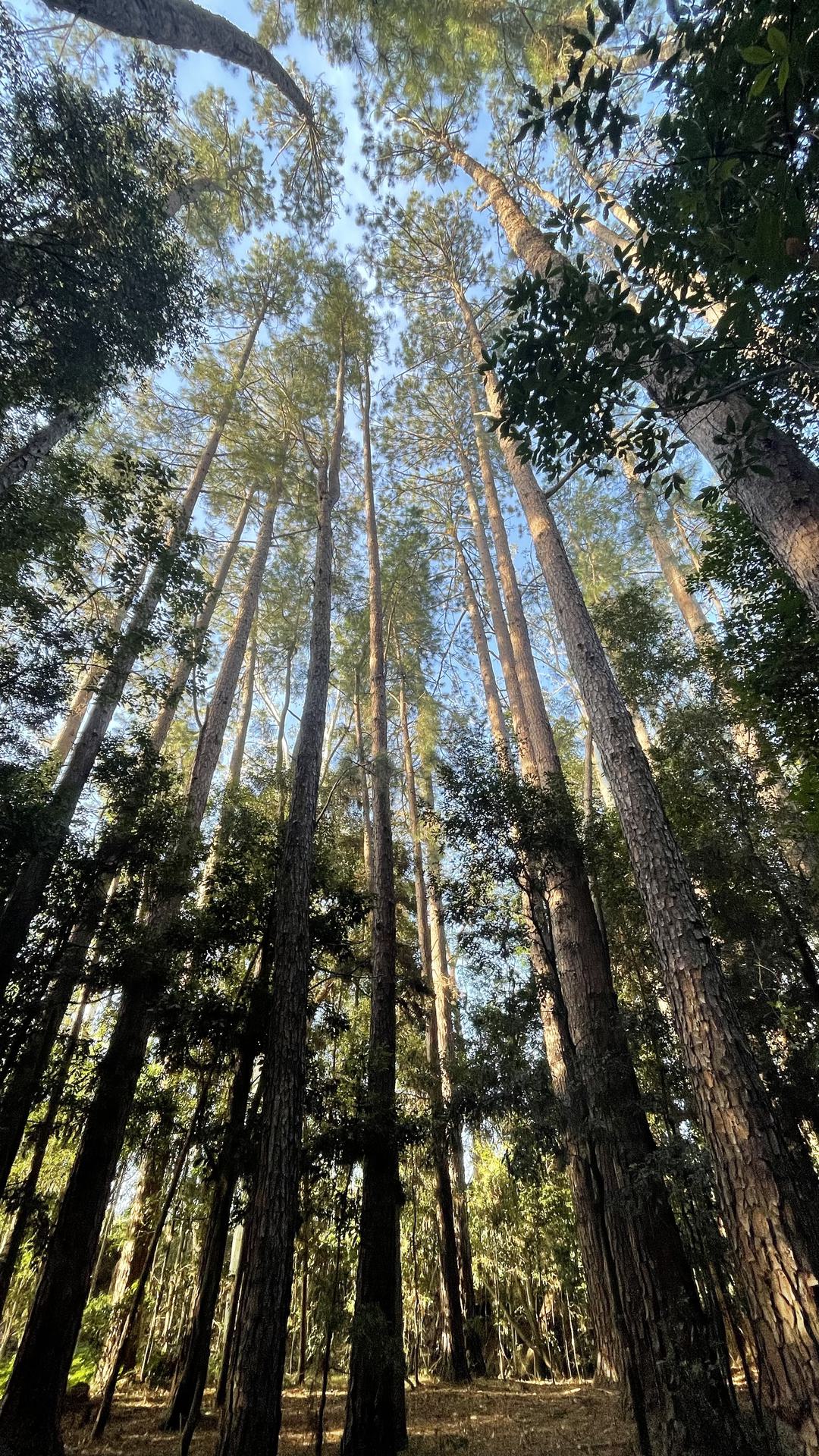
The Watagans are not a range of big open summits. The views come from the escarpment edges, where the forest suddenly stops and the land drops away. These three are the ones worth the drive.
- Monkey Face Lookout: The best known view in the park, looking out over rainforest gullies and across the Martinsville valley, with Lake Macquarie in the distance through the trees. Nearby rock platforms are used by abseiling groups, so do not be surprised to see people going over the edge on ropes. NSW National Parks runs maintenance on this area from time to time, so check the park alerts before you drive up
- Gap Creek Lookout: A short walk from near the Monkey Face car park, around 600 metres, to another view down into the rainforest. Easy to pair with Monkey Face, and usually quieter
- The Narrow Place Lookout: A dramatic spot where the ridge pinches in and drops away on both sides. It is also a common starting point for the Great North Walk section, so you can combine a view with the first stretch of the track
If you are into photography, go late in the afternoon. The light comes in low across the gullies, and you will have most of the lookouts to yourself on a weekday.
Before You Go: The Practical Stuff
The Watagans reward a little planning. Most of the problems I hear about from guests come from one of these five things.
The roads are unsealed
The park roads are gravel, narrow in places and often potholed. NSW National Parks advises they are suitable for 2WD vehicles in dry conditions only, and a 4WD at other times. In a normal car on a dry day you will be fine if you drive slowly. After a big rain, either take a 4WD or pick a different day. Give yourself more time than the map suggests: forest roads are slow, and that is part of the charm.
Bring water and food
There is no drinking water in the park and nothing to buy. Fill bottles before you leave, pack lunch, and if you want to use the wood barbecues at the picnic areas, bring your own firewood. The nearest shops on that side are around Cooranbong. On our side, stock up in Wyong or Tuggerah on the way into the valley.
Download the map first
Mobile reception in the park is poor to non existent. Download the free NSW National Parks app and save the Watagans map while you still have signal. For longer walks, tell someone where you are going and when you expect to be back. It is the kind of advice that feels over the top until the one day it is not.
Spring means fire danger days
This is the one that matters most right now. In much of NSW the bush fire danger period starts on 1 October and runs through summer. The park is always open in principle, but NSW National Parks can close it in bad weather, for road works or on days of high fire danger, and wood fires are off on total fire ban days. Before you head up on a warm, windy spring day, check the NSW National Parks alerts and the RFS. If the park is closed, the valley and the coast are still there, and a closed park is a good reason for a slow day at your stay.
Leave the dog for the state forest
Dogs are not permitted in the national park. If your dog is part of the trip, walk in the state forest, where dogs on lead are allowed in most areas, or around the property. Our dog friendly glamping guide has more on travelling with a dog out here.
A Watagans Day From the Dooralong Valley
Here is the day I would plan for a guest staying two nights with us in spring. It assumes one full day, a dry week, and no fire danger closures.
- Early: Coffee outside while the mist lifts off the mountains. Pack water, lunch, a jacket and proper shoes. Check the park alerts while you still have WiFi
- Morning: Drive up to Gap Creek. Do the falls track first while your legs are fresh and the light is soft in the gully, then the forest walk down to the creek if you still have energy
- Lunch: Eat at the Gap Creek picnic tables, or drive on to Boarding House Dam and have lunch by the water before the moss wall circuit
- Afternoon: Monkey Face and Gap Creek lookouts on the way out, ideally as the light starts to drop
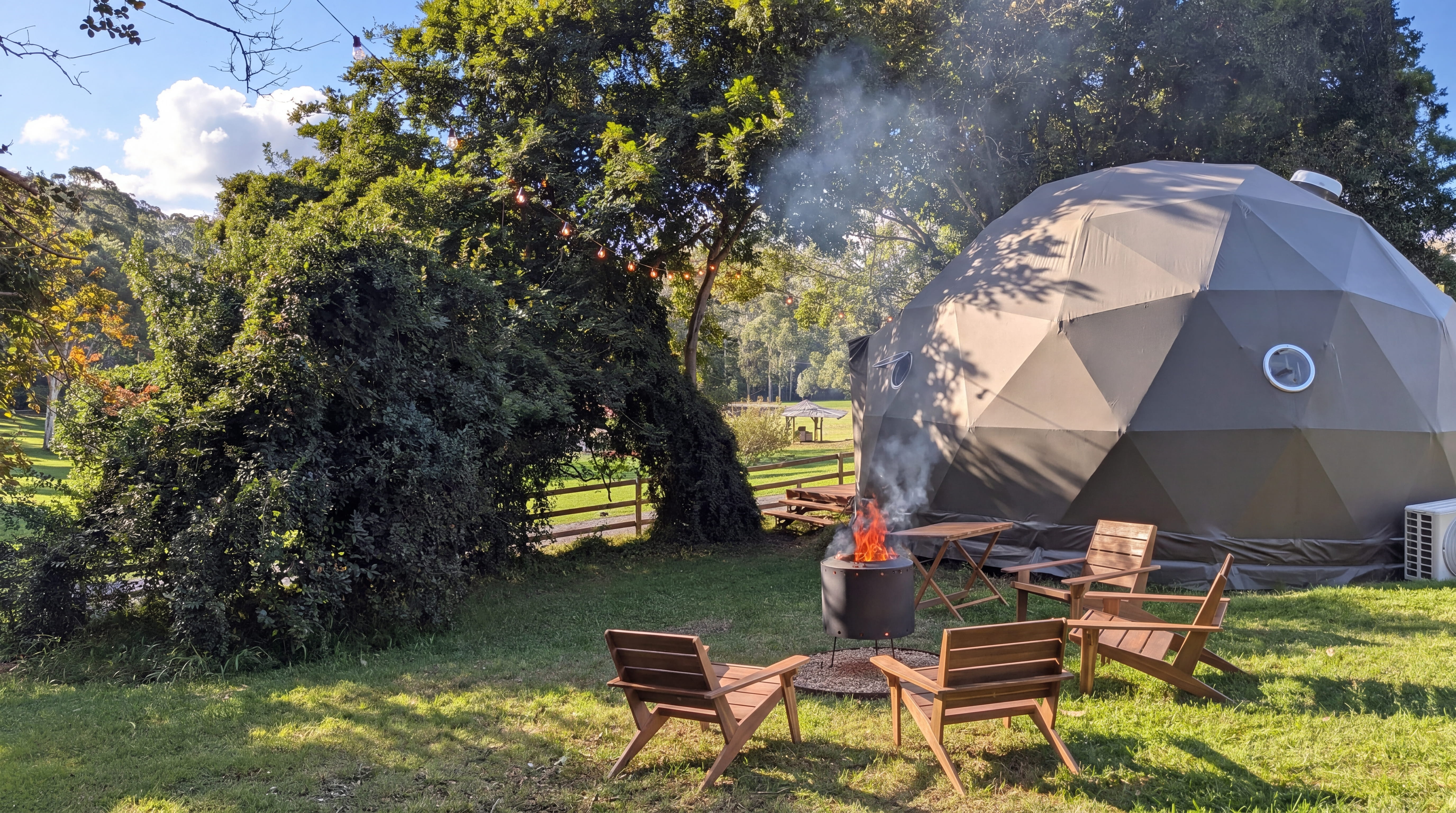
- Evening: Back down to the valley, a hot shower, and dinner by your fire pit as the stars come out. The ranges you walked all day are a black silhouette against the sky. It is a good feeling
On the second day, keep it slow. Walk the dawn redwood grove and the pine forest on the property, or pick something from our local's guide to the Dooralong Valley, from the orange orchards to the alpacas. If you want a change of scene, the Hunter Valley is about 45 minutes north on the other side of the range, and our spring glamping guide covers what the season is like out here month by month.
Where to Stay Near the Watagans
There are campgrounds inside the park if you want to pitch a tent next to your car. If you would rather come back from a day on the trails to a real bed, air conditioning and a hot shower, we have four stays in the valley below. Every one has air conditioning, Starlink WiFi, and access to the shared clubhouse with its kitchen, bathrooms, bar and snooker table. Three of the four have their own private fire pit. All of them are pet friendly, with a $50 pet fee per booking rather than per pet.

The Nest Glamping Dome
Seven metre geodesic dome, sleeps four. King bed plus a modular couch that converts to a queen sofa bed. Panoramic glass, air conditioning, and a private fire pit for tired legs after a day on the trails.
View & book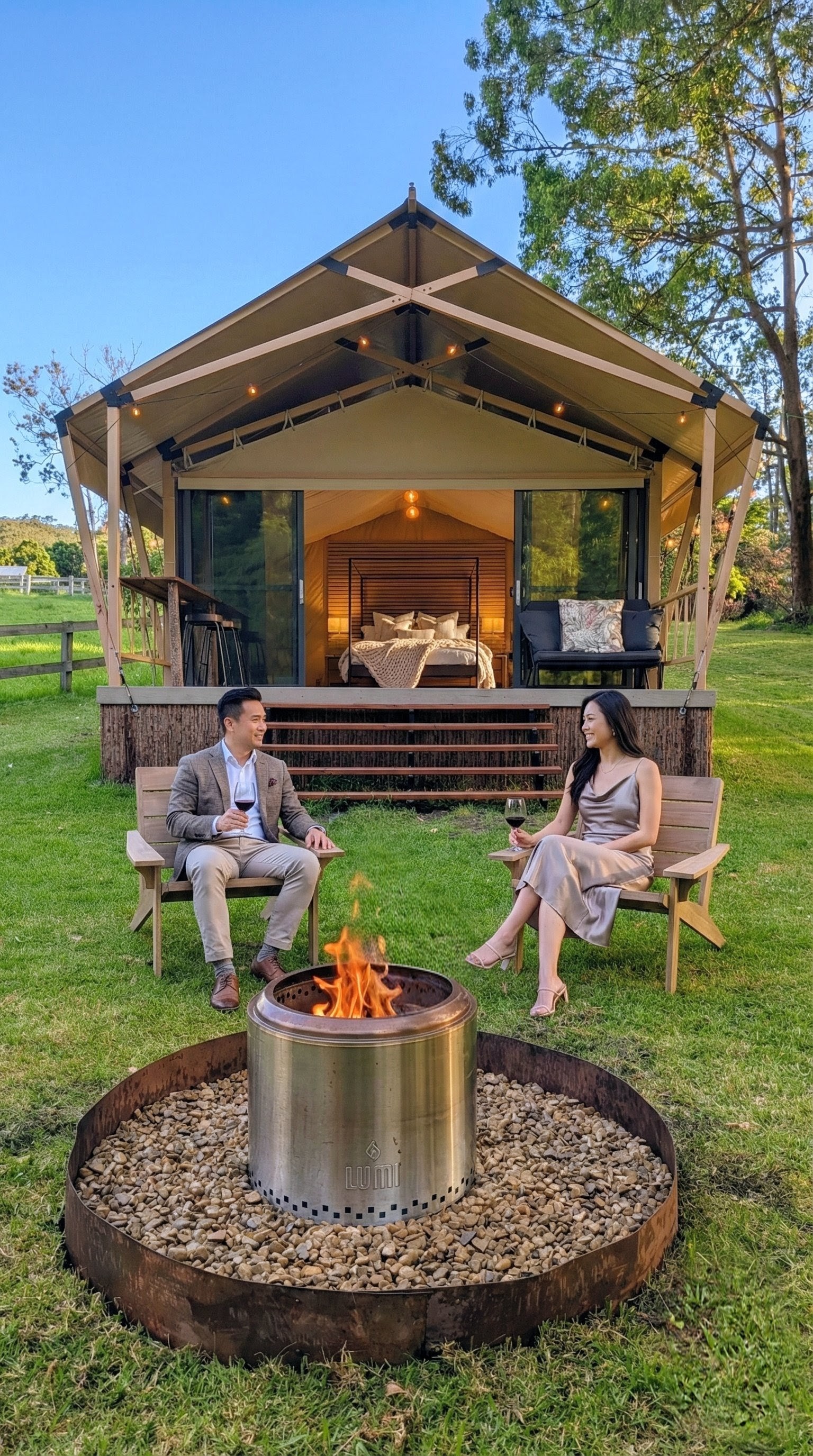
Redwood Safari Tent
Sleeps three on a queen bed plus a single sofa bed, best suited to couples. Sliding glass doors onto the redwood grove, air conditioning, and a private fire pit.
View & book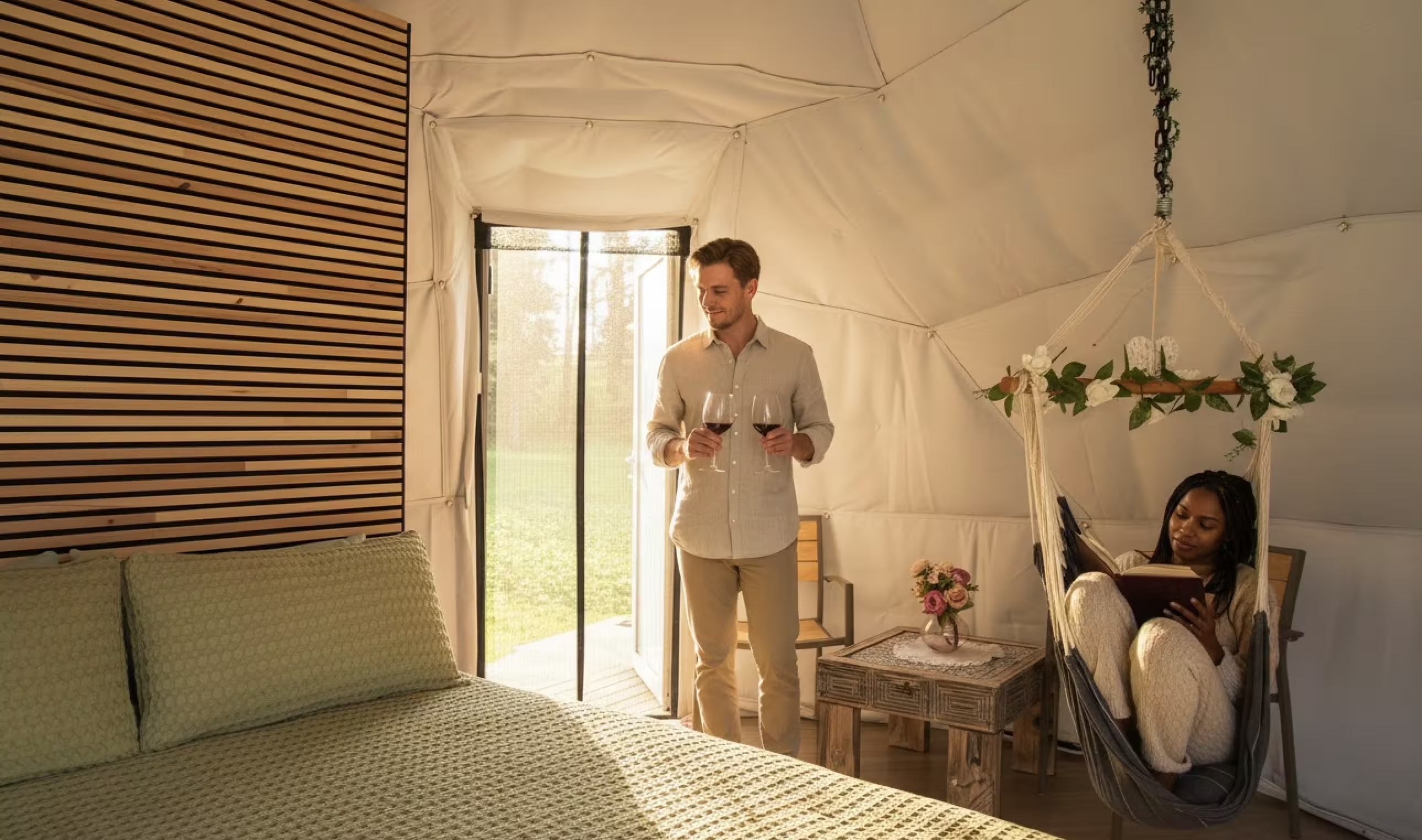
The Burrow Glamping Dome
Geodesic dome for two with a queen bed and panoramic windows. Air conditioning and a private fire pit. A good base for a walking weekend for two.
View & book
Serene Family Retreat
Sleeps four on a queen bed plus two singles, inside the clubhouse building. Air conditioning and room to spread out. No fire pit of its own, but the closest stay to the kitchen for packing lunches.
View & bookBringing a walking group or the whole family? All four stays can be booked together as a whole property buyout, which sleeps 10 to 13 guests in beds and gives you the grounds and clubhouse with no other guests on site. There is a full guide to how a buyout works. A fifth stay, the Glass Cabin, is coming late 2026.
What Guests Say
"This place was absolutely beautiful, perfect for a peaceful getaway. We loved the unique stay of being in a dome and they did a great job to make everything convenient and comfortable for your stay."
"Amazing place, amazing host. Everything was picture perfect. We really enjoyed our time. Riley was really quick to respond and really helpful. Would suggest others to experience the glamping experience."
"Great stay at this beautiful safari tent in the middle of a farm. We slept very comfortably and hearing the rainstorm outside at night whilst warm and cosy was really nice. The bathroom is outside but very close by. Bring some waterproof shoes in case it rains at night and you need to make the short trek in darkness."
Frequently Asked Questions
In the Watagan Mountains, between Lake Macquarie and the Central Coast hinterland, roughly an hour from Newcastle. The main day areas such as Gap Creek are reached from the Cooranbong and Freemans Waterhole side, and the mountains rise along the western edge of the Dooralong Valley.
No. There is no park entry fee. The campgrounds at Gap Creek and Bangalow need to be booked through NSW National Parks, so check their site for current camping fees before you go.
Usually, in dry weather. The park roads are unsealed, narrow and can be potholed, and NSW National Parks advises they are suitable for 2WD vehicles in dry conditions only. After heavy rain, use a 4WD or choose a different day.
From the Gap Creek day area, a short and mostly flat track leads to a fork. The falls branch is about 450 metres to the base of the falls, steep with rock steps, so allow around an hour return with breaks. It is slippery after rain, and the climb back up is the hard part.
No. Dogs are not permitted in NSW national parks. The neighbouring Watagan State Forest allows dogs on lead in most areas, which is the better choice if your dog is coming walking with you.
The park is open year round, but NSW National Parks can close it in poor weather, for road closures or on days of high fire danger. In spring and summer, check the NSW National Parks alerts and the RFS before you leave, and expect wood barbecues to be off limits on total fire ban days.
Getting Here & Contact
Getting Here
- From Sydney CBD: 90 minutes via M1 Pacific Motorway
- From Sydney Airport: 90 minutes
- From Hornsby: 60 minutes
- From Newcastle: 60 minutes
You will need a car. The valley is quiet and transport options are limited.
Open in Google MapsGet in Touch
For availability and pricing, use our booking site.
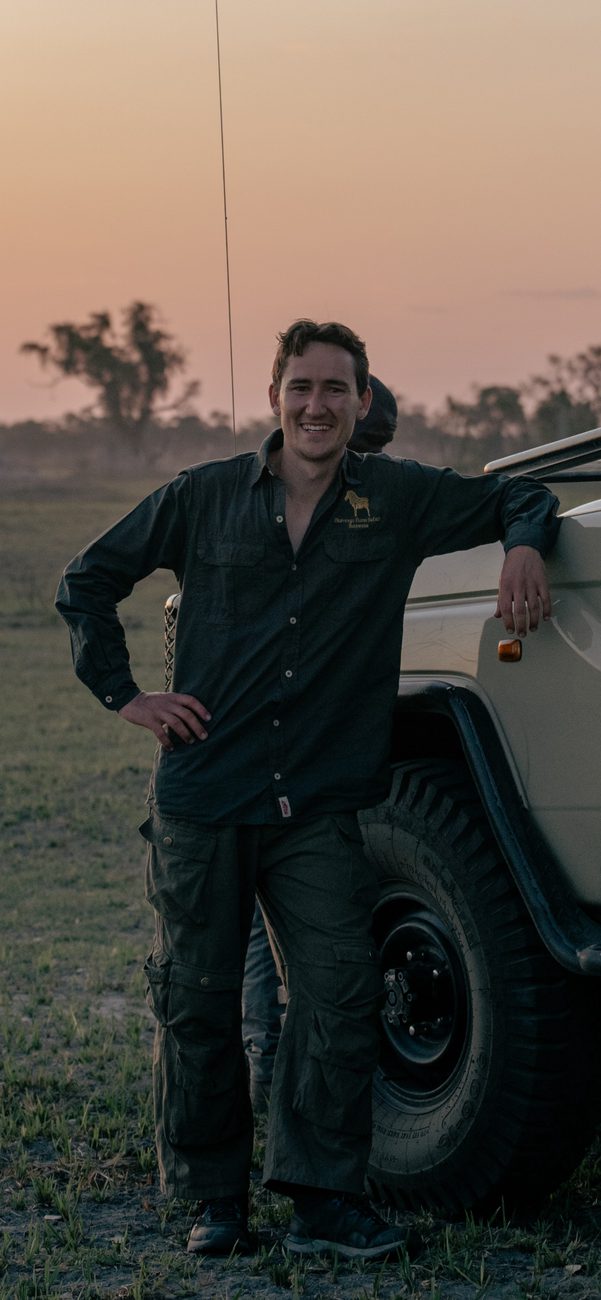
Written by Riley Mackillop
Founder of Unwind Escapes. Riley built the property from the ground up starting with a single bell tent in 2022. He now runs four unique glamping stays in the Dooralong Valley, Central Coast NSW.