Whale Watching on the Central Coast: Best Spots, Season Guide & Where to Stay
Up to 50,000 humpback whales pass by the Central Coast each winter. Here is exactly where to see them and how to make a weekend of it.
Book a Winter StayWhy the Central Coast Is One of the Best Places to Watch Whales in NSW
Every year between May and November, somewhere between 40,000 and 50,000 humpback whales travel the east coast of Australia. They head north from their Antarctic feeding grounds to the warm waters off Queensland to breed and give birth, then turn around and swim the whole route back again with their calves. It is one of the longest mammal migrations on the planet, and a big stretch of that highway runs right past the Central Coast.
What makes this stretch of coastline so good for whale watching is the geography. The Central Coast has elevated headlands that jut out into the Pacific, giving you a natural grandstand view. You do not need a boat. You do not need expensive gear. A clear morning, a decent pair of binoculars, and the right headland is enough to watch humpbacks breach, blow, and slap their tails just a few hundred metres offshore.
I live in the Dooralong Valley, about 40 minutes inland from the coast. During whale season, a morning drive to Norah Head or Crackneck Point is one of the best things you can do on a winter weekend up here. You get the whales in the morning, then come back to the valley for a fire pit evening under dark skies. It is the kind of weekend that makes you wonder why you do not do it more often.
When Is Whale Watching Season on the Central Coast?
The whale watching season on the Central Coast runs from roughly May through November, but the experience changes depending on when you go.
Northward Migration (May to July)
The first humpbacks start appearing off the Central Coast in May, and numbers build through June. By late June and into July, the northward migration hits its peak. This is when you will see the most whales. They are moving with purpose, often travelling alone or in small groups called pods. Adult males sometimes breach repeatedly, launching their 30-tonne bodies clear of the water and crashing back down. It is genuinely spectacular.
The peak northward period, late June through mid-July, is the most reliable window for shore-based viewing. Whales pass close to headlands, and on a good morning you might count a dozen or more from a single lookout.
Southward Migration (September to November)
The return trip south is different and, for many people, even better. Mothers travel with their newborn calves, moving more slowly and staying closer to shore for protection. Calves are playful and curious. They breach, roll, and sometimes approach boats. The southward migration peaks in September and October.
The trade-off is that whales are more spread out during the return trip, so you might see fewer in a single session. But the behaviour you witness (mothers guiding calves, juveniles playing) makes up for it.
Best Months at a Glance
- May: Early sightings begin. Numbers are low but building each week.
- June: Activity ramps up. Reliable sightings from headlands most days.
- July: Peak northward migration. Highest numbers, most breaching.
- August: Transition period. Some whales still heading north, some already returning.
- September - October: Peak southward migration. Mothers and calves close to shore.
- November: Stragglers and late calves. Sightings become less frequent.
Best Whale Watching Spots on the Central Coast
You do not need a boat to see whales on the Central Coast. Several headlands give you elevated, wide-angle views over the ocean, and humpbacks regularly pass within a few hundred metres of shore. Here are the spots that consistently deliver.
Norah Head Lighthouse
This is the standout. The lighthouse sits on a rocky headland that sticks out into the Pacific, and the elevation gives you a panoramic view up and down the coast. Whales pass close to the headland, sometimes so close you can hear them blow. There is parking nearby and a flat walking path around the point, so it is accessible for most people. Get there early on weekends during peak season because the car park fills up.
Norah Head is about 40 minutes by car (37 km) from Dooralong Valley, making it an easy morning trip before heading back inland for the afternoon.
Crackneck Point Lookout
Located above MacMasters Beach in Wyrrabalong National Park, Crackneck Point is a dramatic clifftop lookout with views that stretch from Terrigal in the south to Norah Head in the north. The height here is a real advantage: you can spot whale spouts from kilometres away and track pods as they move along the coast. The lookout is a short walk from the car park on Tudibaring Head, and there are benches to sit and wait.
Bouddi Coastal Walk
If you want to combine whale watching with a bushwalk, the Bouddi Coastal Walk in Bouddi National Park is hard to beat. The trail runs from Putty Beach to MacMasters Beach, covering about 8 kilometres along clifftops and through coastal heathland. During whale season, you can watch humpbacks from multiple vantage points along the walk. Allow three to four hours to walk the full trail at a pace that gives you time to stop and scan the ocean.
Wybung Head
Further north, Wybung Head near Gwandalan is less crowded than the more popular spots and still offers excellent elevated views. It is a good option if you prefer a quieter experience. The walking trail to the headland takes about 20 minutes from the car park and passes through banksia woodland.
Soldiers Beach and Toowoon Bay
For a more relaxed session, the rockshelf at the southern end of Soldiers Beach and the headland above Toowoon Bay are popular local spots. You will not get the elevation of Norah Head, but whales do pass close to shore here, especially during the southward migration when mothers and calves hug the coastline. Grab a coffee from one of the nearby cafes and sit on the rocks.
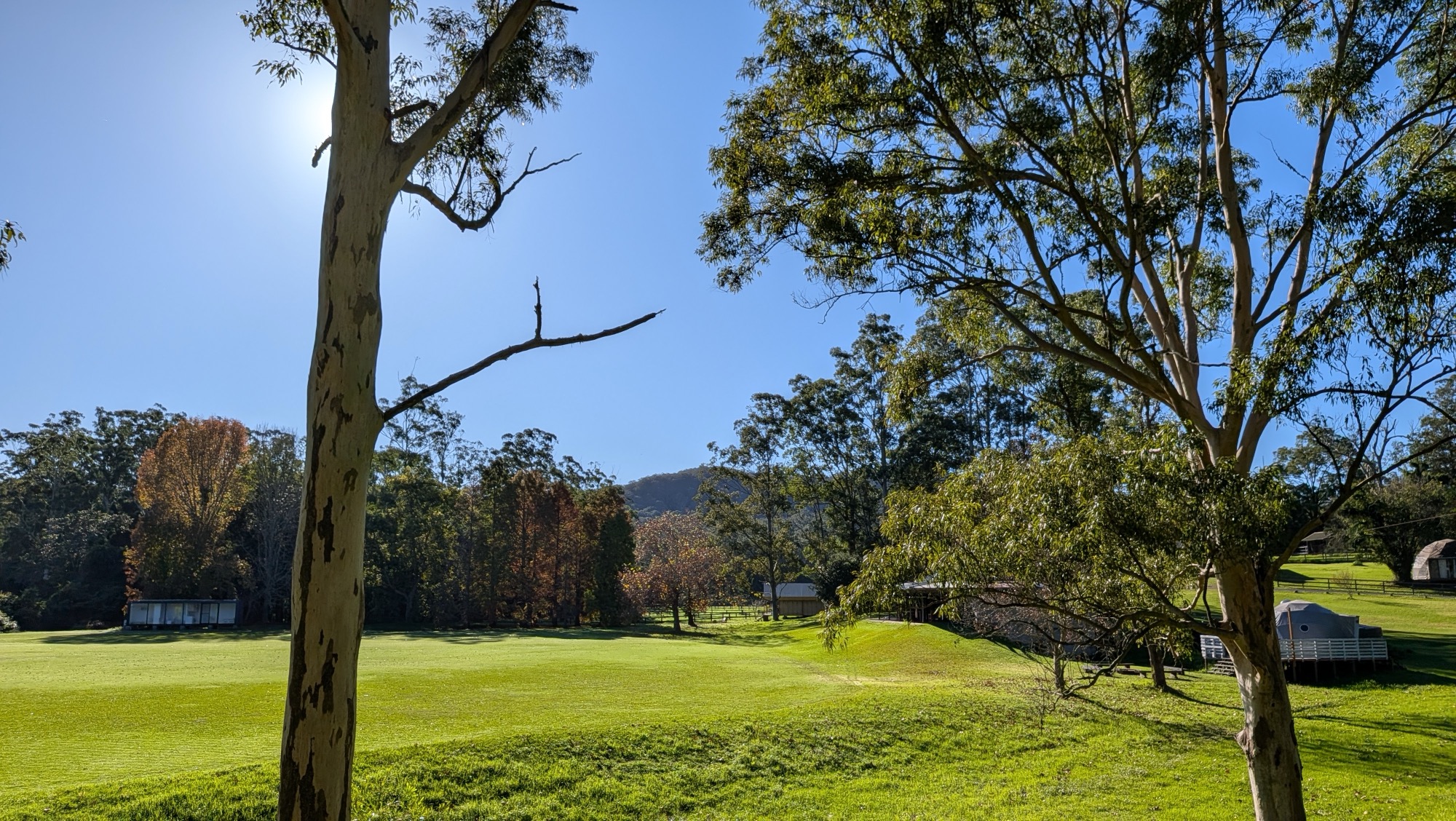
After a morning watching whales on the coast, come back to the peace of Dooralong Valley.
Whale Watching Boat Tours on the Central Coast
Shore-based watching is brilliant, but getting out on the water takes the experience to another level. Several operators run whale watching cruises from the Central Coast during the season, departing from Terrigal Haven and Hardys Bay.
Terrigal Ocean Tours run whale watching cruises, dolphin cruises, marine life tours, and fishing charters from Terrigal and Hardys Bay, with tickets starting from $75 per person. We list them in our experiences shop so you can book directly.
A typical tour lasts two to three hours, and boats are designed with open viewing decks so everyone gets a clear line of sight. You will get much closer to the whales than you can from shore, sometimes within 100 metres, and the scale of a humpback whale surfacing next to a boat is something you do not forget.
What to Expect on a Boat Tour
- Duration: Most tours run 2 to 3 hours.
- Sighting guarantee: Many operators offer a free follow-up cruise if no whales are spotted, though sightings are almost certain during peak season.
- Seasickness: The ocean can be choppy in winter. Take seasickness medication 30 minutes before boarding if you are prone to motion sickness. Ginger tablets work for some people. Sit toward the back of the boat and keep your eyes on the horizon.
- What to bring: Warm layers (it is colder on the water than on land), sunglasses, sunscreen, a camera with a zoom lens if you have one, and binoculars.
- Booking: Book ahead, especially for weekend tours during June and July. Tours do sell out.
Even if you have seen whales from shore before, doing it from a boat at least once is worth it. The sound of a whale exhaling a few metres from the boat is something that stays with you.
What Whales Will You See?
The headliners are humpback whales. They make up the vast majority of sightings on the Central Coast, and the population is in strong shape: an estimated 40,000 to 50,000 humpbacks now migrate along the east Australian coast each year, up from fewer than 200 in the 1960s after commercial whaling nearly wiped them out. It is one of the great conservation success stories.
Humpbacks are the showiest of the baleen whales. They breach (leap out of the water), pec-slap (slap their long pectoral fins on the surface), tail-slap, and spy-hop (poke their heads above the surface to look around). Males also sing: long, complex songs that can last for hours, believed to play a role in mating. If you are on a boat tour, the captain may lower a hydrophone so you can listen.
You may also see Southern right whales, though they are less common on this stretch of coast. They are slower and stockier than humpbacks, with no dorsal fin and distinctive white callosities on their heads. Minke whales and bottlenose dolphins are also occasional visitors.
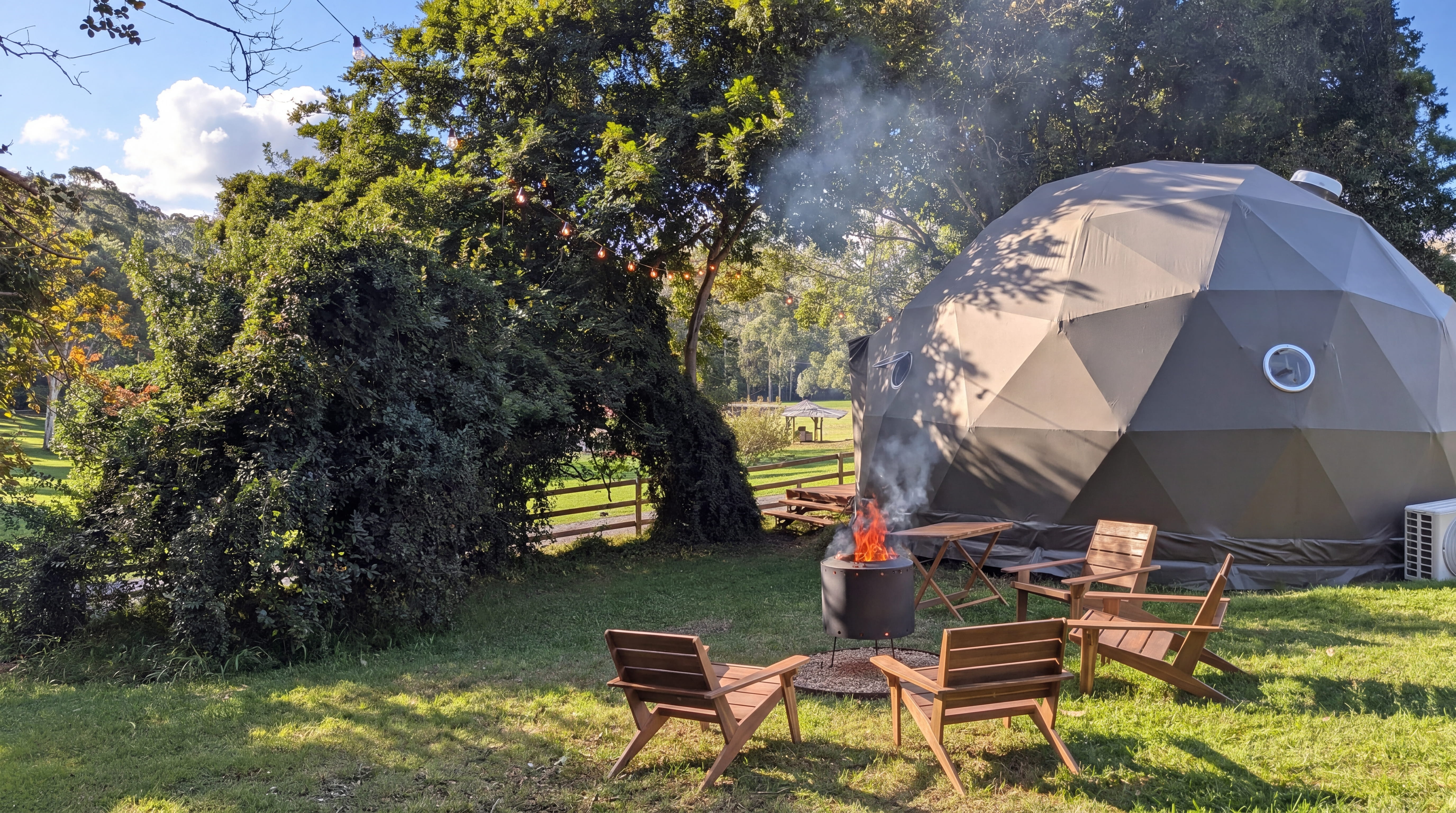
Finish your whale watching day around a private fire pit at Unwind Escapes.
Tips for the Best Whale Watching Experience
Whether you are watching from a headland or a boat, a few things make a big difference to what you see.
Time of Day
Early morning is best for shore-based watching. The ocean is usually calmer before the afternoon sea breeze picks up, the light is softer and makes it easier to spot spouts against the water, and the popular lookouts are less crowded. Aim to arrive by 7 or 8am during peak season.
Bring Binoculars
You can see whales with the naked eye when they breach close to shore, but binoculars let you spot spouts at a distance and track whales as they move. Even a cheap pair makes a real difference. Scan the horizon slowly and systematically rather than trying to spot movement with quick glances.
Be Patient
Whales do not perform on cue. You might see a dozen in 20 minutes, or you might wait an hour before the first spout appears. Bring a thermos of coffee, a warm jacket, and settle in. The waiting is part of it. It makes the sighting feel earned.
Check the Conditions
A calm, clear day with light winds is ideal. Choppy water and whitecaps make it much harder to spot spouts. Check the Bureau of Meteorology marine forecast the night before and look for light winds and low swell. A bit of cloud cover is fine. Overcast days sometimes reduce surface glare and make whales easier to spot.
Watch for the Signs
A whale spout (or blow) looks like a quick puff of white mist above the water, visible for a few seconds before it disperses. Once you spot a blow, keep your eyes locked on that area. The whale will surface again nearby within a minute or two. Also watch for dark shapes just below the surface, fluke (tail) prints on the water, and of course the full body launching out in a breach.
What Else to Do on the Central Coast in Winter
Whale watching is reason enough to visit, but winter on the Central Coast has more going on than most people realise. Here are a few ways to fill out your weekend.
Pick Your Own Oranges in Dooralong Valley
From July through October, the orchards in Dooralong Valley open for orange picking. Cedar Farm on Dittons Road has over 3,000 trees planted in the 1920s and runs a pick-your-own experience on weekends during navel orange season. You bring your own bags, pay by the kilogram, and can make a morning of it with the kids. Pony rides, tractor rides, and farm animal feeding are also on offer.
Bushwalking in Jilliby State Conservation Area
Right next to Dooralong Valley, the Jilliby State Conservation Area has walking trails through eucalypt forest and sandstone country. The Abbotts Falls Loop is a popular choice, a 7.5-kilometre circuit that takes you past a waterfall and through some dramatic rock formations. The area has over 130 recorded bird species, so bring your binoculars (you will already have them from the whale watching).
Wyong Milk Factory
A short drive from Dooralong, the Wyong Milk Factory is home to local food producers including Little Creek Cheese, Luka Chocolates, and Daily Dough Co. It is a good stop for supplies before heading to your accommodation, or a rainy-day destination in its own right.
Stargazing
Winter skies on the Central Coast are some of the clearest of the year. Low humidity and long nights mean better visibility, and the Dooralong Valley's distance from coastal light pollution gives you a genuine dark sky. The Milky Way core is visible from around April to October, and winter constellations like Orion are at their best. We have written a full guide to winter stargazing in NSW if you want to plan an evening around it.
Mandalong Gallery
A short drive from Dooralong, Mandalong Gallery is an authentic Australian Indigenous art gallery selling paintings, carvings, didgeridoos, and handmade gifts. It is open Saturday and Sunday from 10am to 4pm and worth a visit if you are interested in Aboriginal culture and want to take something meaningful home.
Night Kayaking with Showtime
Showtime Night Kayaking runs a two-hour moonlit paddling tour from Naru Beach on illuminated kayaks. You paddle through calm water with lights beneath the kayak, spotting marine life as you go. It is a completely different way to experience the coast at night and pairs brilliantly with a whale watching day trip.
Fire Pit Evenings
There is something about coming back from a day on the coast, lighting a fire, and cooking dinner outside in the cold air. Winter is fire pit season, and the cooler temperatures make it genuinely enjoyable rather than just decorative. At Unwind Escapes, The Nest, The Burrow and the Redwood Safari Tent each have their own private fire pit with firewood supplied.
Where to Stay for Whale Watching on the Central Coast
Most people think of staying on the coast itself for whale watching: Terrigal, Avoca, The Entrance. And those are fine options. But staying in the hinterland gives you something different: quiet. No traffic noise, no restaurant crowds, no streetlights washing out the night sky.
Dooralong Valley is about 40 minutes inland from the main whale watching headlands, and it could not feel more different from the coast. You are in a rural valley surrounded by horse paddocks, dawn redwood forests, and open farmland. The drive to Norah Head takes 40 minutes through quiet back roads, and you come home to a property where the loudest sound at night is frogs.

The Nest Glamping Dome
7-metre geodesic dome with king bed, cinema area, and private fire pit. Sleeps up to 4. Perfect for couples or small families who want space.
View & Book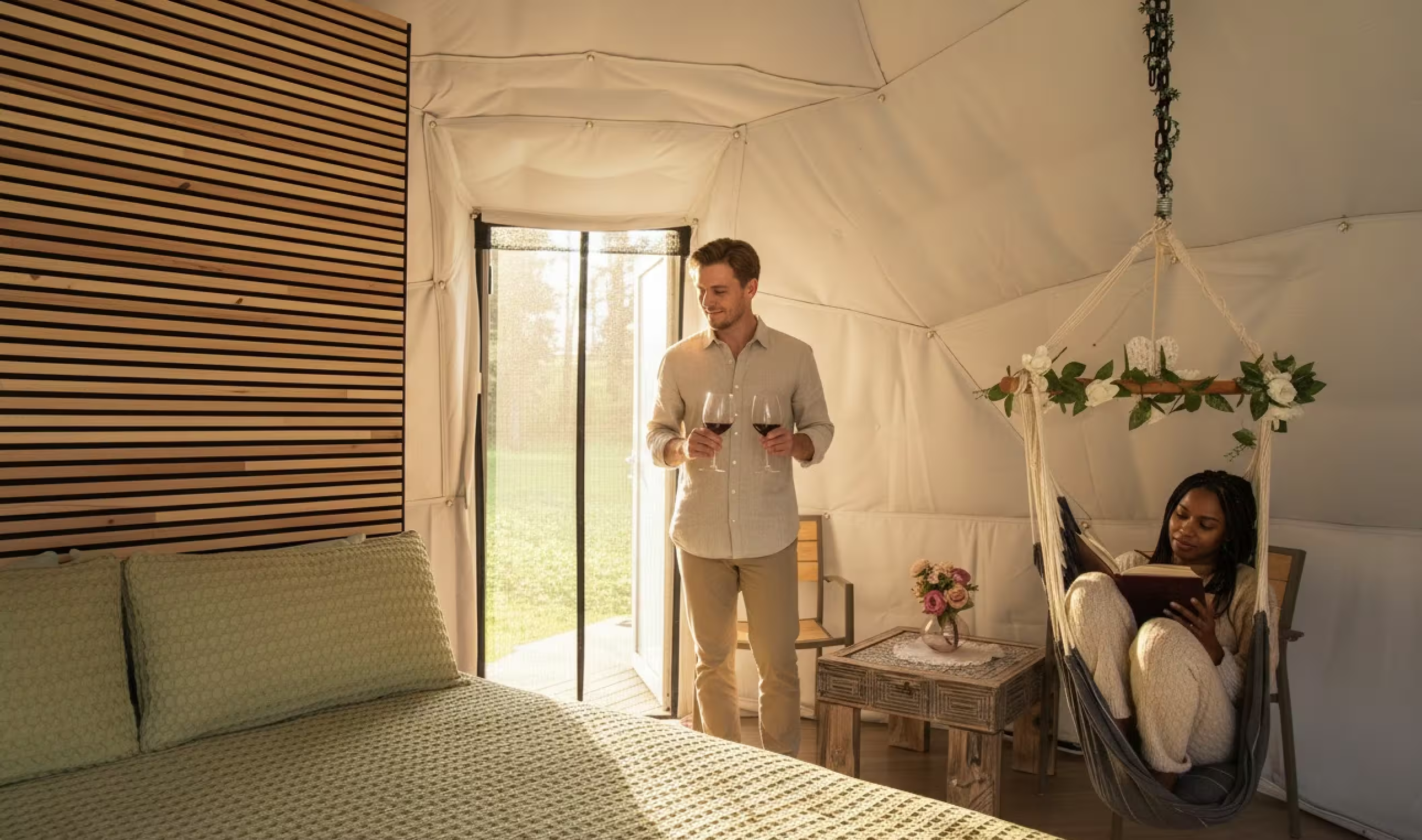
The Burrow Dome
Cosy dome with queen bed and panoramic window looking out into the bush. Sleeps 2. Great for couples wanting an intimate winter escape.
View & Book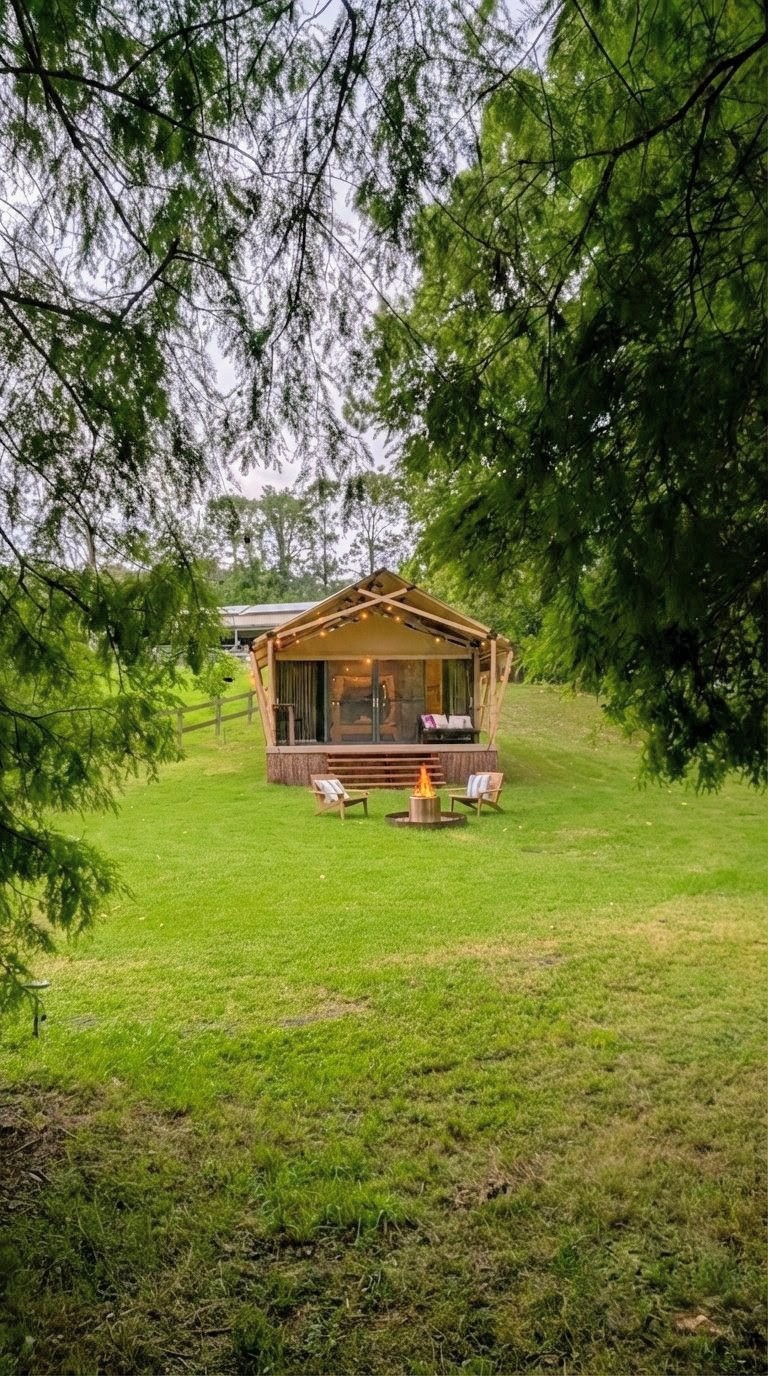
Redwood Safari Tent
Canvas safari tent nestled in a grove of dawn redwood trees with queen bed. Sleeps 2 to 3. The sound of rain on the canvas is winter magic.
View & BookAll stays at Unwind Escapes include air conditioning for heating and access to the shared clubhouse with its kitchen, bathrooms, bar area, and snooker table. The property is pet-friendly, so your dog can come too.
Planning Your Whale Watching Weekend
Here is how I would plan a two-night winter weekend on the Central Coast with whale watching as the centrepiece.
Friday Evening
Drive up from Sydney after work. The 90-minute trip on the M1 is mostly highway and runs against the traffic heading south. Arrive at your accommodation in Dooralong Valley, unpack, and light the fire pit. Pick up supplies from Coles or Woolworths in Wyong on the way in (about 15 minutes from the valley). Cook dinner over the fire or use the clubhouse kitchen. Spend the evening outside. The winter sky is worth staying up for.
Saturday Morning
Wake up early and drive 40 minutes to Norah Head Lighthouse. Aim to arrive by 7:30am for the best conditions and a good car park spot. Spend 90 minutes scanning the ocean. If the whales are active, you will not want to leave. Grab breakfast at one of the cafes in Toukley or The Entrance on the way back.
Saturday Afternoon
Head to Cedar Farm in Dooralong for orange picking (if visiting July to October), or explore the Abbotts Falls Loop in Jilliby State Conservation Area. Alternatively, drive 20 minutes to the Wyong Milk Factory for cheese, chocolate, and local produce. Return to your accommodation mid-afternoon, rest, and get the fire going again for dinner.
Sunday Morning
For a different vantage point, drive to Crackneck Point Lookout at MacMasters Beach (about 40 minutes, 36 km). The clifftop view here is dramatic and you can often spot whales that Norah Head misses. If you are feeling active, walk a section of the Bouddi Coastal Walk. Even a short stretch gives you multiple ocean viewpoints. Head home after lunch, beating the Sunday afternoon traffic back to Sydney.
The Nest glamping dome at Unwind Escapes, your base for a whale watching weekend in the Dooralong Valley hinterland.
How to Get to the Central Coast for Whale Watching
The Central Coast sits between Sydney and Newcastle on the NSW coast, and the main whale watching spots are easy to reach by car.
- From Sydney CBD: 90 minutes via the M1 Pacific Motorway. Take the Sparks Road exit for Dooralong Valley, or continue to the Wyong exit for coastal spots.
- From Hornsby: 60 minutes. A quicker run if you are in Sydney's north.
- From Newcastle: 60 minutes south on the M1. The Central Coast whale watching spots are roughly halfway between Newcastle and Sydney.
- From Sydney Airport: 90 minutes. Head north on the M1. The route is straightforward.
You will need a car for whale watching on the Central Coast. The headlands are not serviced by public transport, and Dooralong Valley is rural. There are no buses or trains in the valley itself. The driving is easy though: mostly highway until you exit onto quiet country roads.
If you are staying at Unwind Escapes, we recommend using Google Maps for the last stretch into the valley. The property is at Lemon Tree, NSW 2259, and the entrance is well-signed from Dooralong Road.
Frequently Asked Questions
Whale watching season on the Central Coast runs from May to November each year. The northward migration of humpback whales peaks in late June and July, while the southward return, often with calves, peaks in September and October. Both periods offer excellent viewing from shore or by boat.
Norah Head Lighthouse is widely considered the best shore-based whale watching spot on the Central Coast. Its elevated position gives you a wide ocean view and whales regularly pass close to the headland. Crackneck Point Lookout at MacMasters Beach and the Bouddi Coastal Walk are also excellent options.
Yes. The Central Coast has some of the best shore-based whale watching in NSW. Elevated headlands like Norah Head, Crackneck Point, and Wybung Head give you clear sightlines over the ocean. Bring binoculars, watch for spouts and breaches, and give yourself at least 30 minutes. On a good day during peak season, you can spot multiple whales from a single lookout.
Dooralong Valley is about 35 to 40 minutes by car from the main whale watching lookouts. Norah Head Lighthouse is roughly 40 minutes east (37 km), and Crackneck Point at MacMasters Beach is about 40 minutes south-east (36 km). It makes a great base for a winter weekend that combines coastal whale watching with a hinterland glamping stay.
Yes. Several operators run whale watching cruises from Terrigal Haven and other departure points during the season. Tours typically last two to three hours and get you much closer to the whales than shore-based viewing. Some operators offer a guaranteed sighting policy. Book ahead during peak season as tours fill quickly on weekends.
Winter on the Central Coast is full of things to do beyond whale watching. Pick your own oranges at farms in Dooralong Valley from July onwards, explore the bushwalking trails in Jilliby State Conservation Area, visit the Wyong Milk Factory for cheese and chocolate, and spend your evenings by a fire pit under dark skies. It is a genuinely beautiful time to visit.
Getting Here & Contact
Getting Here
- From Sydney CBD: 90 minutes via M1 Pacific Motorway
- From Sydney Airport: 90 minutes
- From Hornsby: 60 minutes
- From Newcastle: 60 minutes
You will need a car. The valley is quiet and transport options are limited.
Open in Google MapsGet in Touch
For availability and pricing, use our booking site.
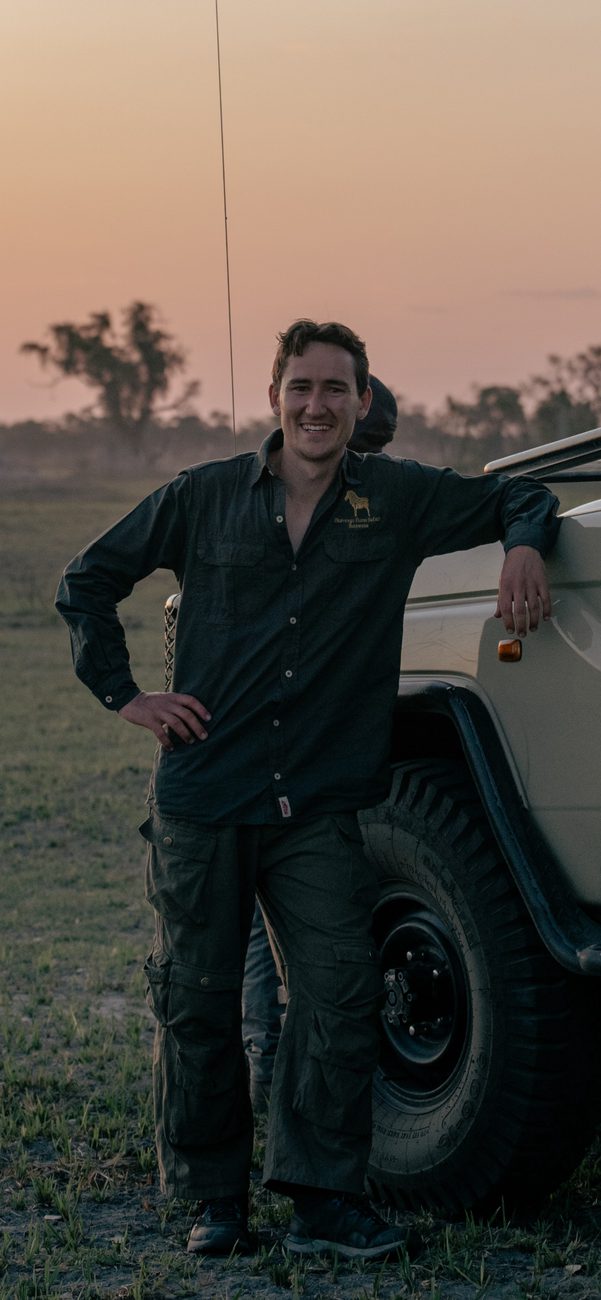
Written by Riley Mackillop
Founder of Unwind Escapes. Riley built the property from the ground up starting with a single bell tent in 2022. He now runs four unique glamping stays in the Dooralong Valley, Central Coast NSW.